Interpolation is the process of estimating values between known data points. This is frequently used in mechanics when resampling data or looking up values from tables.
Linear Interpolation with NumPy
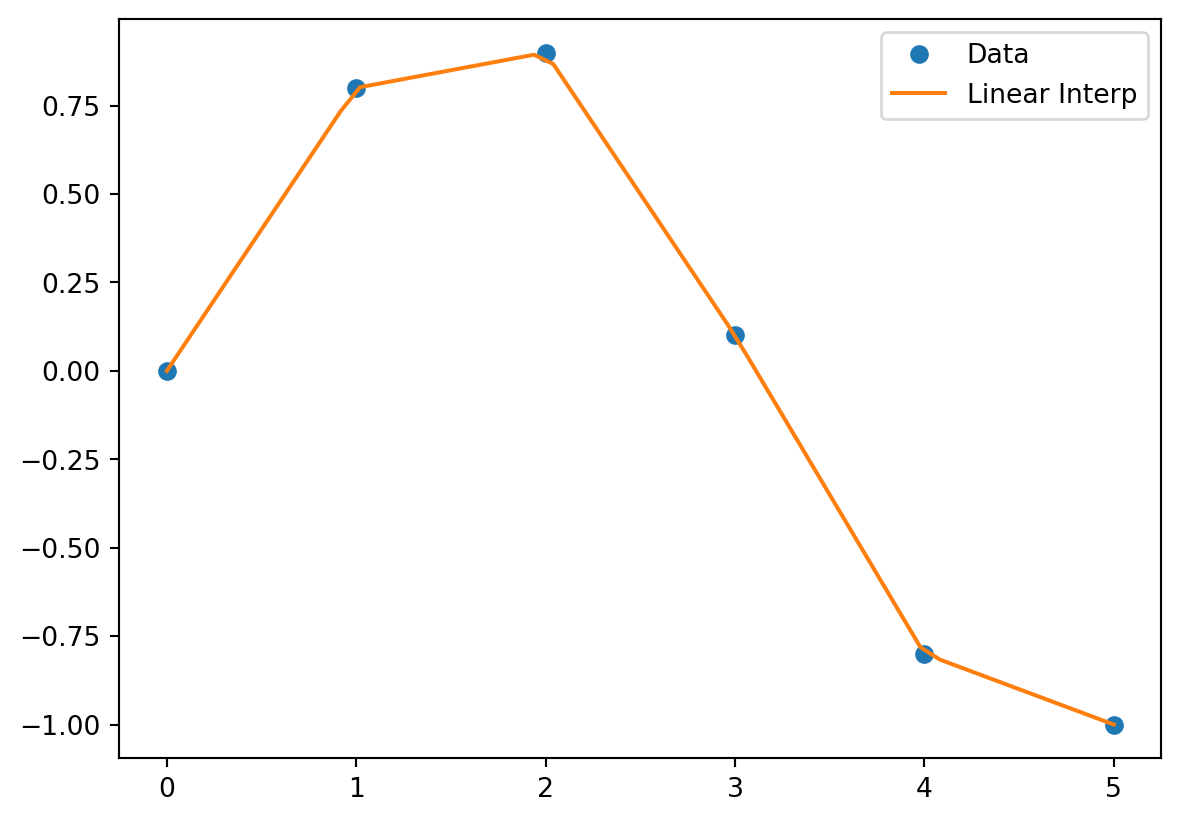
NumPy’s interp function performs one-dimensional linear interpolation.
import numpy as npimport matplotlib.pyplot as plt# Known data pointsx = np.array([0, 1, 2, 3, 4, 5])y = np.array([0, 0.8, 0.9, 0.1, -0.8, -1.0])# Points where we want to interpolatex_new = np.linspace(0, 5, 50)# Linear interpolationy_linear = np.interp(x_new, x, y)plt.plot(x, y, 'o', label='Data')plt.plot(x_new, y_linear, '-', label='Linear Interp')plt.legend()plt.show()
Advanced Interpolation with SciPy
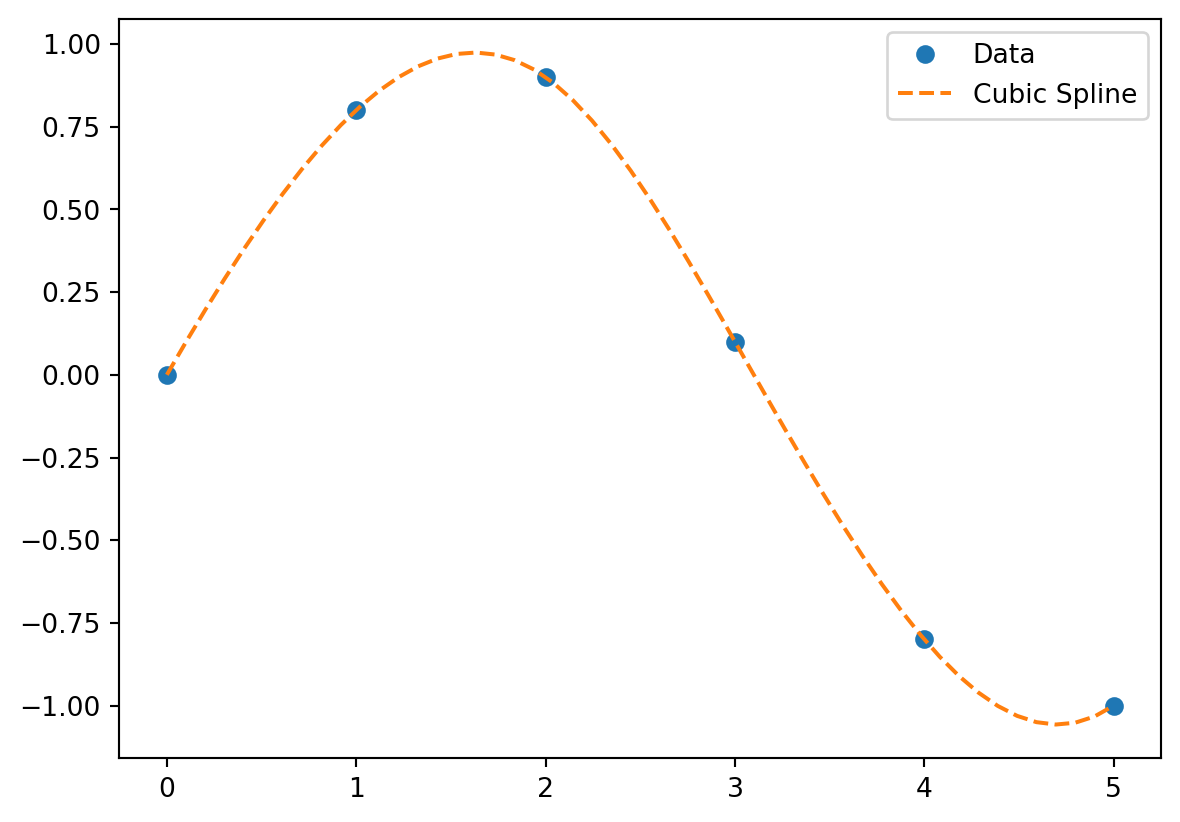
For more advanced interpolation, such as cubic splines, use scipy.interpolate.
from scipy.interpolate import interp1d# Create an interpolation function (Cubic spline)f_cubic = interp1d(x, y, kind='cubic')# Evaluate at new pointsy_cubic = f_cubic(x_new)plt.plot(x, y, 'o', label='Data')plt.plot(x_new, y_cubic, '--', label='Cubic Spline')plt.legend()plt.show()